
Teaching Your Puppy to Follow You Indoors
Before your puppy can walk nicely beside you outside, they need one simple skill:
Choosing to follow you.
Loose leash walking isn’t about control.
It’s about connection.
And the easiest place to build that connection is inside your home — where distractions are low and success comes quickly.
If you master this stage, outdoor walks become dramatically easier.
Why Indoors First?
The outside world is overwhelming to a puppy.
There are:
-
New smells
-
Moving leaves
-
Cars
-
Birds
-
People
-
Other dogs
-
Sounds from every direction
Competing with that environment too early often creates pulling.
Indoors, you control the environment.
Inside, your puppy can focus.
Inside, you can win.
The Goal: Voluntary Following
You are not dragging your puppy into position.
You are teaching them that staying near you is rewarding.
This creates:
-
Natural check-ins
-
Reduced pulling
-
Better responsiveness
-
Stronger bond
When your puppy wants to stay near you, leash tension becomes rare.
Step 1: Reinforce Attention
Start without even moving.
Say your puppy’s name in a warm tone.
The moment they look at you:
Mark (“Yes!” or click) → Reward.
Repeat several times.
You are building:
Name = Look at me = Good things happen.
This simple pattern becomes your foundation tool later when distractions increase.
Step 2: The “Follow Me” Game
Now add movement.
-
Stand still.
-
Say your puppy’s name.
-
Take one or two steps backward.
-
When your puppy follows you → Mark and reward.
Why backward?
Moving backward encourages your puppy to come toward you naturally. It activates their desire to follow.
Keep it playful.
Do 3–5 repetitions.
Then take a break.
Short and successful beats long and sloppy.
 Step 3: Reward Position, Not Just Movement
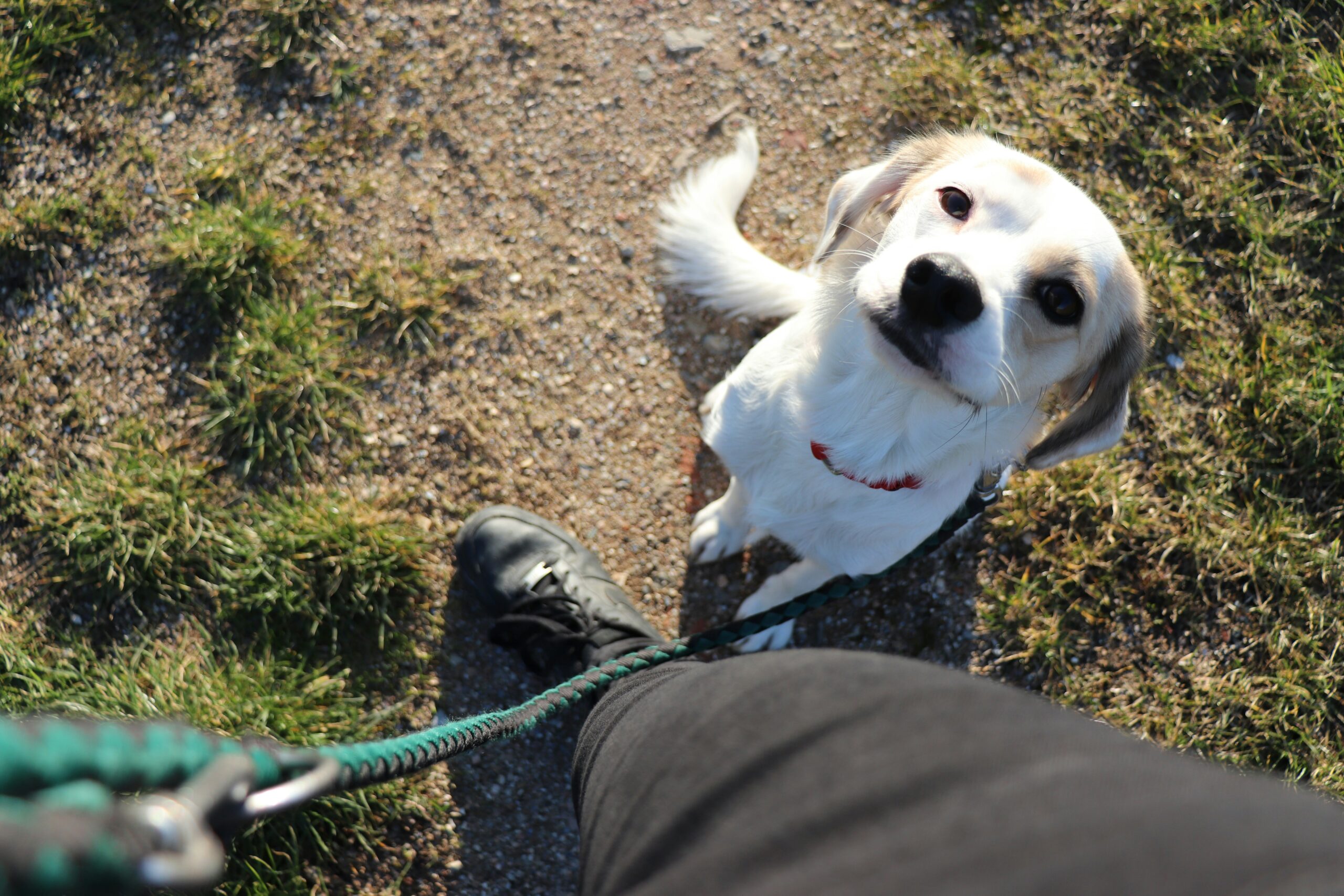
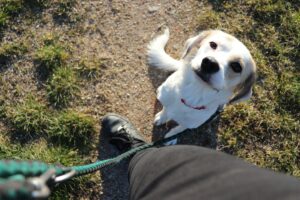
As your puppy follows more consistently, start rewarding near your side.
You don’t need a formal heel position.
But you do want your puppy learning that:
The “magic reward zone” is near you — not out in front.
When they walk beside or slightly behind you:
Mark and reward right at your leg.
Reward placement matters.
If you reward out in front, you’ll encourage forging ahead later.
Add the Leash (Lightly)
Once your puppy eagerly follows you off leash indoors, clip the leash on.
Keep it loose.
Repeat the same exercises:
-
Name → step backward → reward
-
Walk a few steps → reward at your side
-
Stop → wait for them to orient back to you → reward
If the leash tightens, don’t yank.
Simply stop moving.
The moment they shift weight back or turn toward you:
Mark and reward.
They’re learning:
Tension stops progress.
Engagement restarts it.
Keep Sessions Very Short
Puppies under 16 weeks fatigue quickly.
Aim for:
-
3–5 minutes
-
2–3 times per day
-
High reinforcement rate
If your puppy gets distracted by furniture, toys, or sounds — that’s okay.
Just reset and simplify.
Add Gentle Direction Changes
Once your puppy is following well, add unpredictability.
Walk in one direction.
Suddenly turn.
When your puppy follows → reward.
This teaches them to pay attention to your movement.
Dogs who learn to watch your body are much less likely to pull later.
They begin thinking:
“Where is my person going?”
That mindset prevents many leash problems before they start.
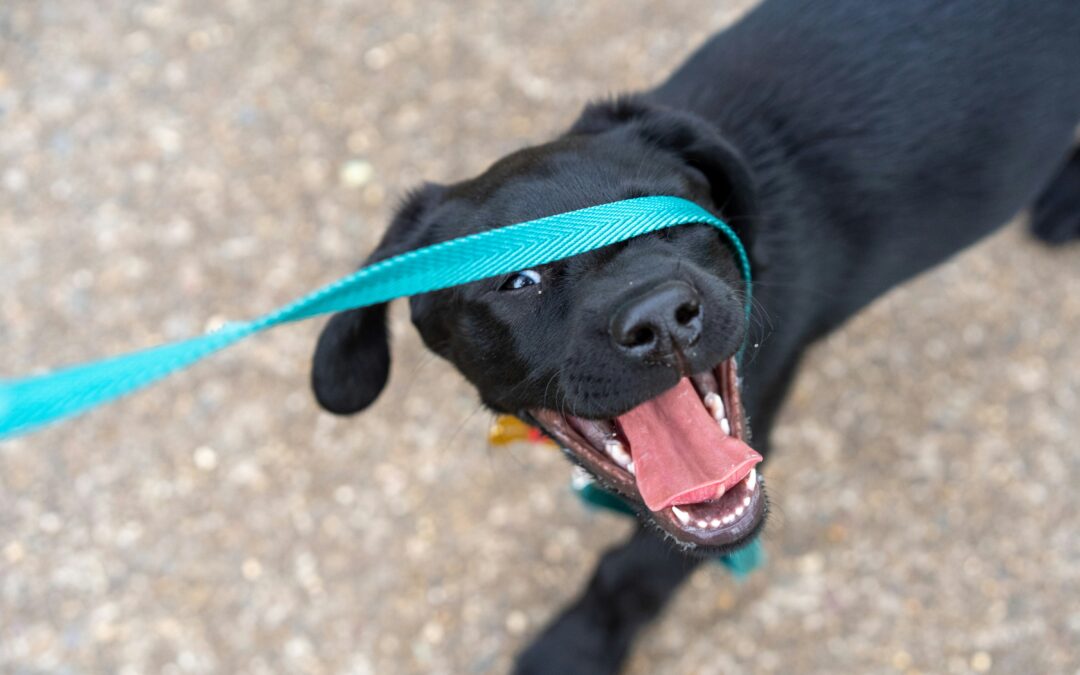
What If Your Puppy Bites the Leash?
Completely normal.
If it happens:
-
Stop moving.
-
Stay neutral.
-
Wait for them to release.
-
Redirect into a short follow exercise.
Avoid turning it into tug-of-war.
Leash biting is often excitement or confusion — not defiance.
Keep it calm and boring.
 What Success Looks Like at This Stage
You’re not looking for perfection.
You’re looking for:
-
Puppy turns toward you when you move
-
Puppy follows short distances
-
Puppy checks in occasionally
-
Minimal leash tension indoors
-
Happy body language
If those are happening, you’re building beautifully.
Why This Prevents Pulling Later
Pulling becomes a habit when:
-
Forward motion is rewarding
-
Attention to the owner isn’t reinforced
-
Distractions are more valuable than connection
By practicing indoors first, you are teaching your puppy:
-
My human’s movement matters.
-
Staying close pays well.
-
Paying attention is worth it.
-
Leash pressure doesn’t get me forward.
These lessons transfer directly to outdoor environments.
The Confidence Factor
Indoor success builds confidence for both of you.
Your puppy learns:
“I understand this game.”
You learn:
“I can guide this calmly.”
Confidence changes your body language.
And your body language affects your puppy more than you realize.
Calm leadership reduces frantic pulling.
Don’t Rush the Outside
It can be tempting to think:
“They’re doing great indoors — let’s go to the park!”
Instead, graduate slowly.
Next step:
-
Driveway
-
Quiet sidewalk
-
Very short outdoor sessions
Each new environment increases difficulty.
Layer challenges gradually.
The Big Picture
Loose leash walking isn’t built on correction.
It’s built on:
-
Engagement
-
Reinforcement
-
Consistency
-
Clear feedback
Indoors is where that story begins.
When your puppy sees walking with you as a cooperative activity — not a competition — everything changes.
And that starts right in your living room.